The generator developed by the company was one of the industrial demonstrators presented at #MMA26, held in Grenoble, France, as part of the final results of the European Harmony project, an initiative aimed at reducing dependence on critical raw materials through the recycling of permanent magnets.
Innovation and sustainability once again come together in one of the major challenges currently facing European industry: ensuring access to critical raw materials essential for electrification, renewable energy, and technological development.
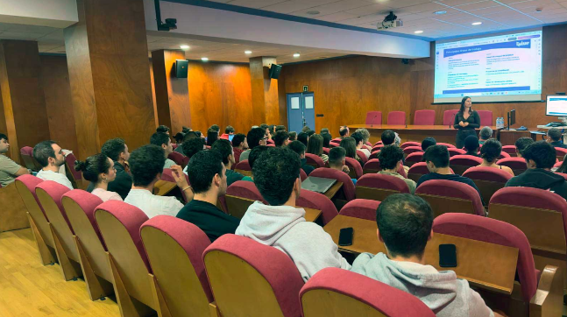
In this context, the European Harmony project presented its final results during the #MMA26 international conference, held in Grenoble, France—a leading event for specialists and researchers in the field of advanced magnetic materials. The initiative, coordinated by Ceit Research Center, has been working in recent years to develop solutions for the recycling and reuse of rare-earth permanent magnets, with the goal of reducing Europe’s dependence on these strategic resources.
One of the highlights of the presentation was the validation of recycled materials through real-world industrial applications. Among the selected demonstrators was a wind turbine developed by Lancor, designed to evaluate the performance of recycled magnets under real operating conditions and verify their feasibility for future industrial applications.
From Research to Industrial Application
During the session held in Grenoble, the project partners demonstrated how materials recovered through various recycling pathways have been incorporated into several technology demonstrators, including an electric motor for automotive use, a hydraulic pump, and the wind turbine developed by Lancor.
The results presented confirmed that the parts manufactured from recycled materials successfully passed quality and performance tests, demonstrating that these solutions can play a significant role in the future of European industry. According to the project participants, the next major challenge is to accelerate industrialization and establish supply chains capable of supplying these materials on a large scale.
For Lancor, being part of this demonstration project represents an opportunity to actively contribute to the development of industrial solutions that combine technological innovation, sustainability, and competitiveness.
A Strategic Challenge for European Industry
Permanent magnets are essential components in electric motors, generators, mobility systems, and numerous technologies associated with the energy transition. However, a large portion of the raw materials needed to manufacture them currently comes from highly concentrated markets, creating significant foreign dependence for the European industry.
This reality was one of the key points highlighted during the presentation of Harmony’s results, which underscored the need to move toward more circular models capable of recovering and reusing strategic materials currently found in end-of-life equipment.
In a context marked by geopolitical tensions, changes in global supply chains, and growing competition for access to critical resources, initiatives such as Harmony are becoming increasingly important.
Innovation and Sustainability to Build the Future
Lancor’s participation in this project reflects a vision that goes beyond the development of high-performance products. The company believes that innovation must also contribute to building an industry that is more resource-efficient, more resilient in the face of global challenges, and more aligned with the sustainability goals demanded by society.
The wind turbine developed as part of the Harmony project demonstrates how collaboration among technology centers, universities, and companies can accelerate the introduction of new solutions to the market and open up new opportunities for the circular economy.
In addition to demonstrating the technical feasibility of recycled materials, the project has advanced our understanding of the processes necessary for their future industrialization, laying the groundwork for a more efficient use of resources considered strategic for Europe.
Committed to a More Resilient Industry
For Lancor, the future of the industry lies in combining technology, sustainability, and adaptability. The validation of recycled magnets in real-world applications represents an important step in that direction and reinforces the need to continue promoting collaborative projects that reduce dependencies, strengthen European industrial capabilities, and accelerate the development of innovative solutions.
Because in an environment where innovation is advancing at an ever-faster pace and global challenges demand new solutions, initiatives like Harmony demonstrate that sustainability and competitiveness can go hand in hand.
The wind turbine unveiled in Grenoble is not just a technology demonstrator; it is also a testament to the potential of European collaboration to build a more sustainable, more resilient industry that is prepared to face the challenges of the future.